


Construction continues on the Eldon C. Stutsman tank farm at the south end of The Hills Line. After finishing the individual buildings, I ran them through the paint booth to get the base color applied. Spray paint made the process fast and simple, especially since most structures were flat white or metallic gray. I did include the one bluish-gray tank in the front left corner. No idea what it contains… but it’s probably essential.

The next step was the backdrops. As before, I used images from Google Streetview to model from afar. Unlike before, the foreground structures will eventually cover a lot of the backdrop. The goal is to give the appearance of a larger complex than I have the space to fully model.

Weathering was done with my usual combination of PanPastel powders and an India Ink and Rubbing Alcohol wash. I worked to vary the amount of rust and crud on the various tanks so that they didn’t look consistent from one to another. That implies that some tanks are either newer or older than others.

I then put down a dirt and gravel base layer before adding grass, weeds, and brush. This time I combined tinted grout with the limestone paver sand to give a slightly darker appearance to the soil. The ballast was raw paver sand, just as it is on the rest of the layout. The structures were then worked into location to build up the earth around them

Scenic Express Farm Pasture Blend was then applied in spots along the track. I tried a different method of applying the static grass using a galvanized wire attached to the ground pin to act as a probe, based on a technique I had seen used on War World Scenics‘ YouTube channel. The result was on par with what I usually get, so I’ll probably stick with what I’ve done in the past in the future.

Additional scenic materials, including Woodland Scenics’ Blended Turfs, were built up in subsequent layers. Diluted Matte Medium was sprayed in between each application to attach everything together. I built a small access road over both tracks using additional paver sand. An old set of freight car trucks was used to clear the flanges and ensure I had the proper clearance.
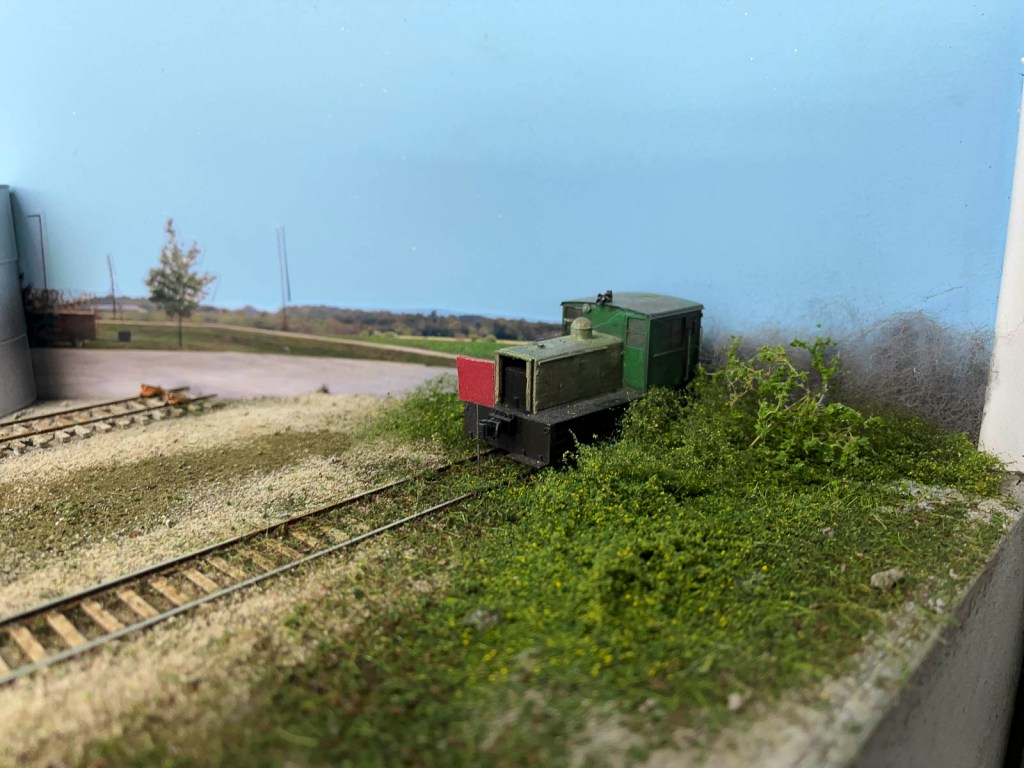
While this portion of the prototype Hills Line doesn’t have many trees or other significant areas of foilage, I did add evidence of a distant tree line and some larger branches around the abandoned Plymouth Critter that sits beyond the red board… and marks the end of the line for The Hills Line.
 The Hills Line
Looks good – thanks for sharing.
LikeLiked by 1 person