


Our basement is a less-than-stellar layout space. That simple statement has driven the design of The Hills Line, and continues to do so. Despite improvements made to the space over the years, I’m still making improvements to the layout due to the space.
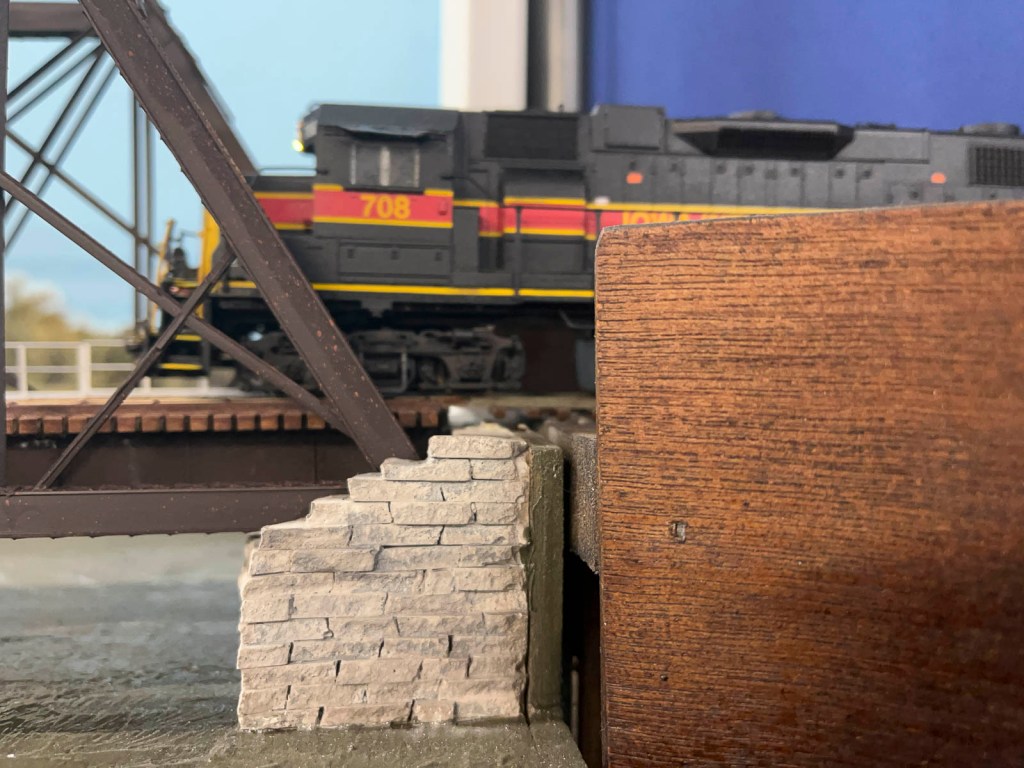
Case in point, the two lift-out sections. To allow access to both the electrical panel and the mechanical and laundry rooms, I built a series of simple lift-outs to span the gaps. These are only in place during operating sessions and are otherwise stored beneath the layout.
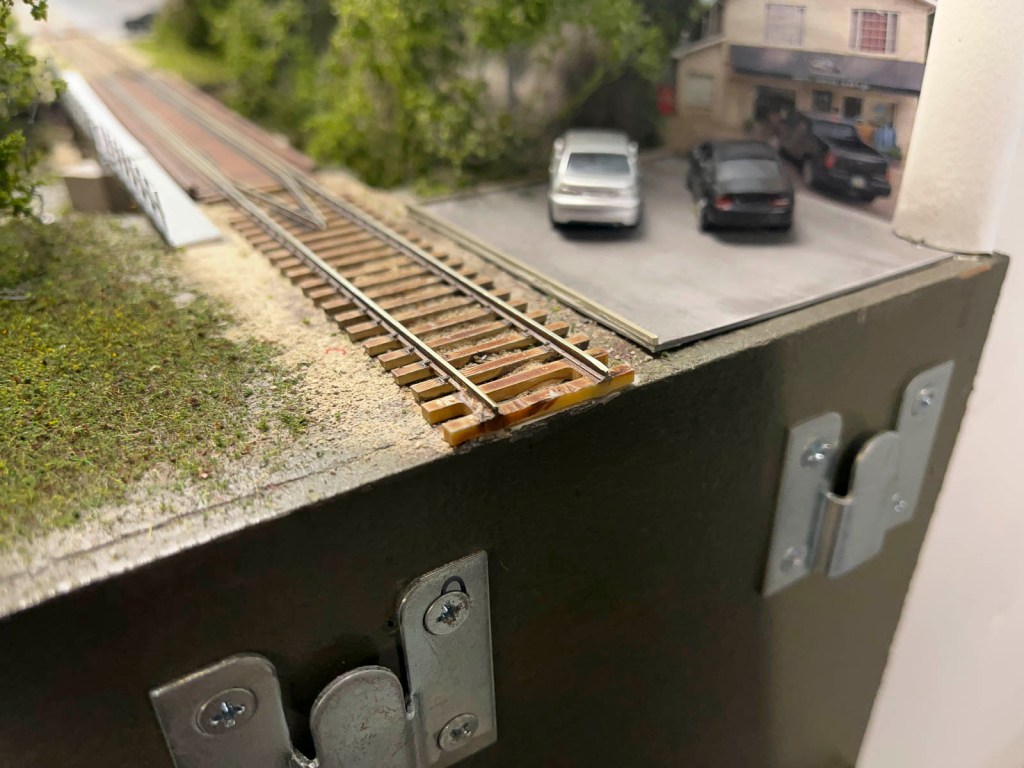
Originally, the rails were secured to both sides of the gap with PC board Gapmaster Ties from American Tie and Timber. To be clear, Gapmasters are a wonderful product, and they kept the track perfectly aligned without issue. But I then went and screwed it up by filing the rail profile down well beyond what was reliable, or even visually appealing.
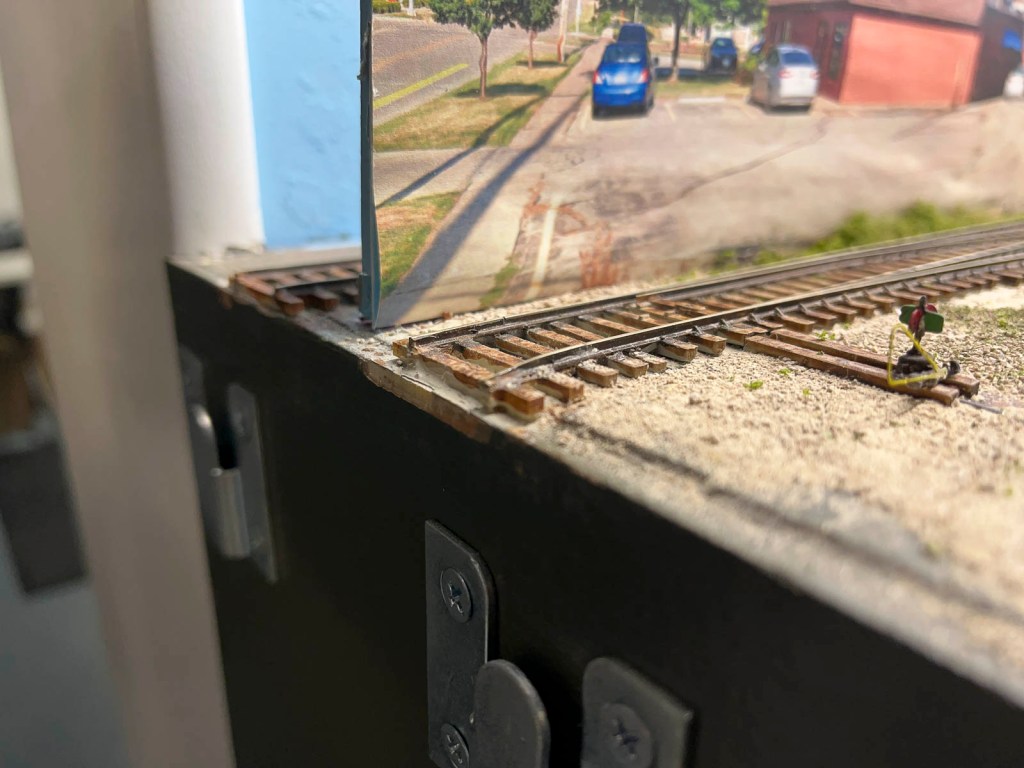
My judicious filing of the rail to prevent derailments ended up causing many derailments, especially on the curved lift-out in front of the electrical panel. Since the rail physically dropped at the joint, cars would dip as each wheel crossed it. Since it was on a curve, it caused a seesaw effect to the train, leading to cars on the ground.
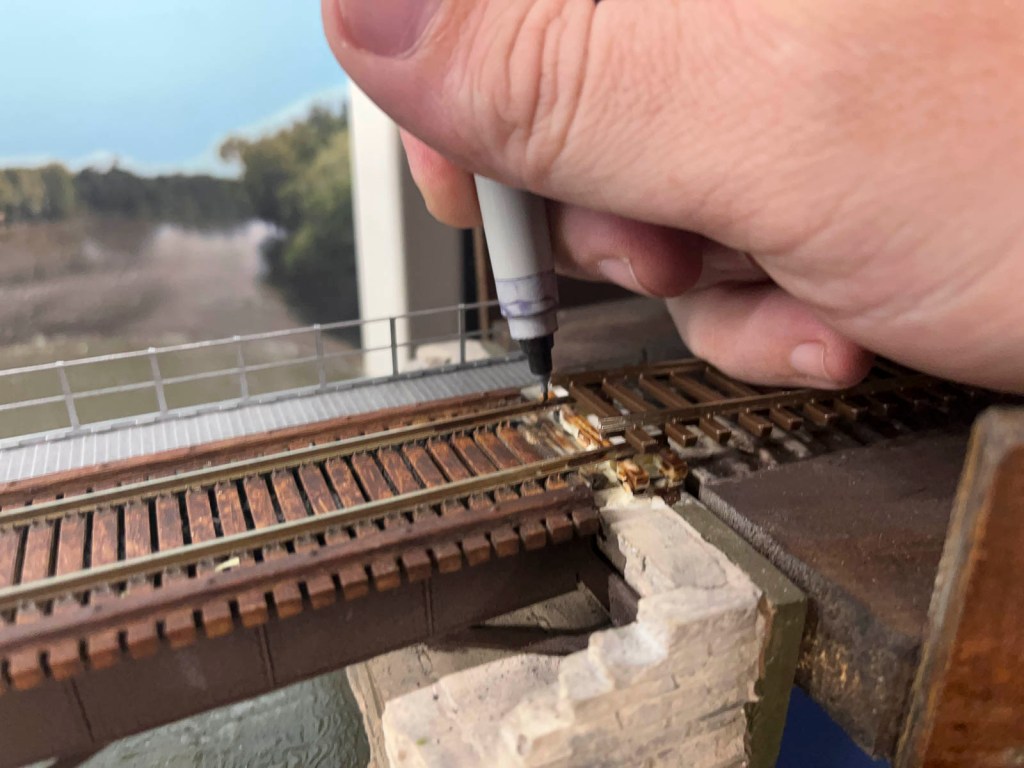
So I decided to rebuild the track portions of the lift-outs, this time allowing the track to extend beyond the joint and onto the layout proper. New pieces of Micro Engineering Code 70 flextrack were cut and spliced into the layout, with particular attention placed on getting everything aligned.
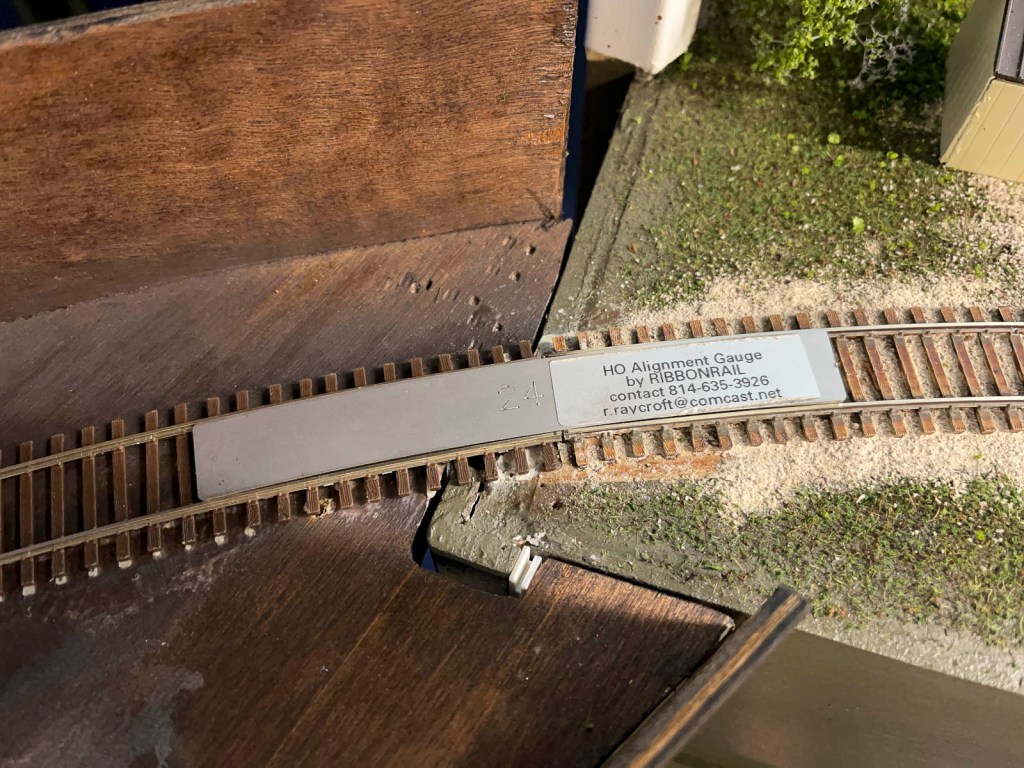
I used copious amounts of construction adhesive, along with track gauges and alignment ribbons, to make sure everything stayed in place. The result is a near-perfect connection from lift-out to layout with little to no bump in the transition.
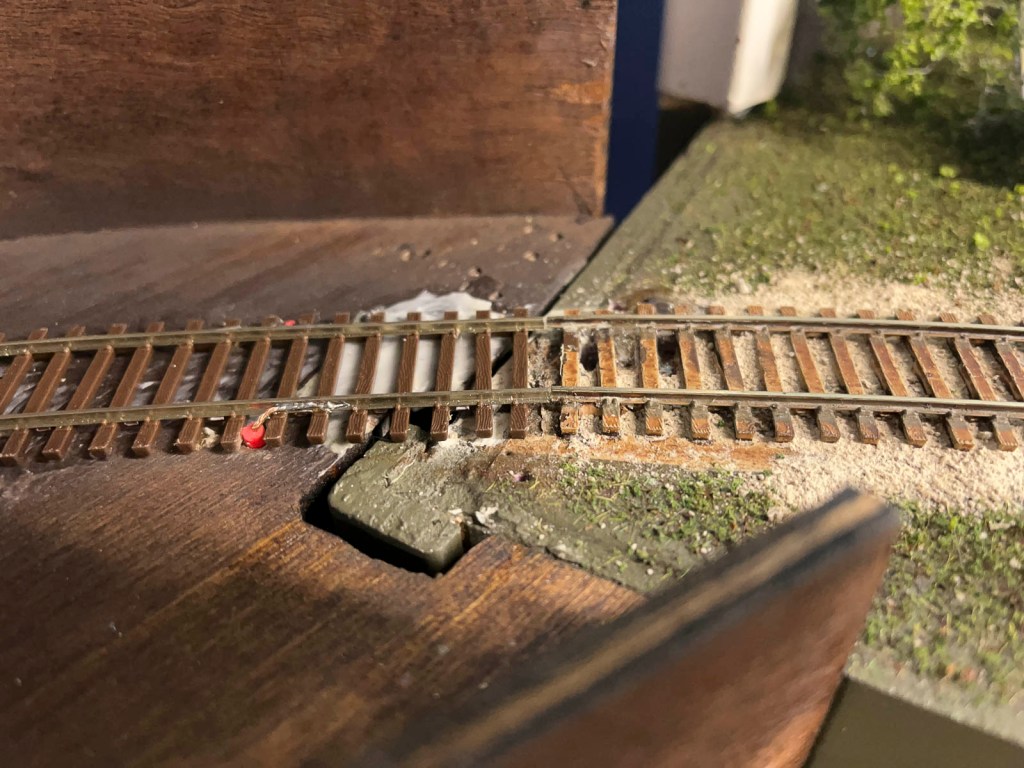
I’ll continue to keep an eye on the joint, especially as we move out of winter and into the warmer months. That’ll be the case for the foreseeable future, at least as long as we have this layout space. Considering the alternative was no layout at all, I’m thankful for what I have.
 The Hills Line
I grew up in Northern IN/Southern MI where the ground was stable enough that I never had these problems. I have been in FT Worth, TX since 1980 and we don’t have basements and we have all types of clay but no “black dirt”. Houses are on slabs or crawlspaces and houses literally flex as the clay shrinks and expands. We finally have a great house for a layout because it was build in an area where the soil is great and our lot has great drainage so it is consistent. My layout room is upstairs with 100% climate control required to be usable. I am slowly building now that I am retired. I have had several lift out sections and they are always a last resort. I love how your layout is turning out!
Pat
LikeLike