


My freight car fleet is still woefully inadequate.
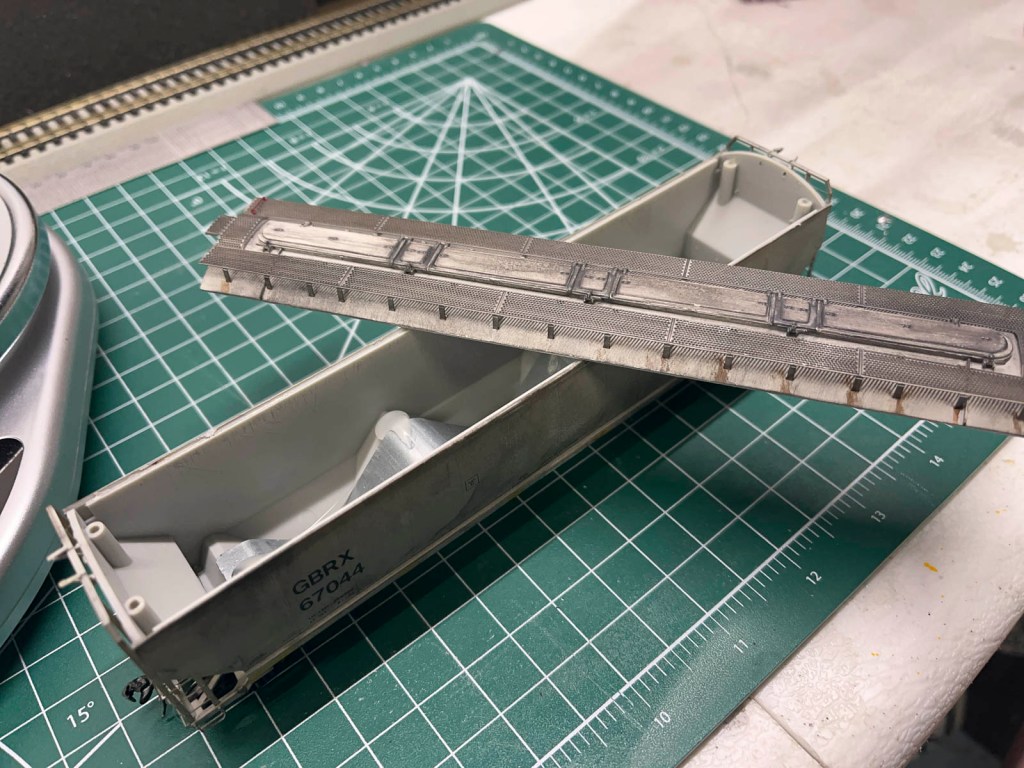
I’m continuing to research the types of cars that run on The Hills Line so I can best represent them on the layout. But even if I were to find the absolute perfect replica of what I need, I know they’ll still need work.
To start, they need to bulk up. Since I routinely run short trains, any underweight car can cause significant problems, mostly in the form of derailments at the most inopportune times. Time to put on a few pounds… or ounces.
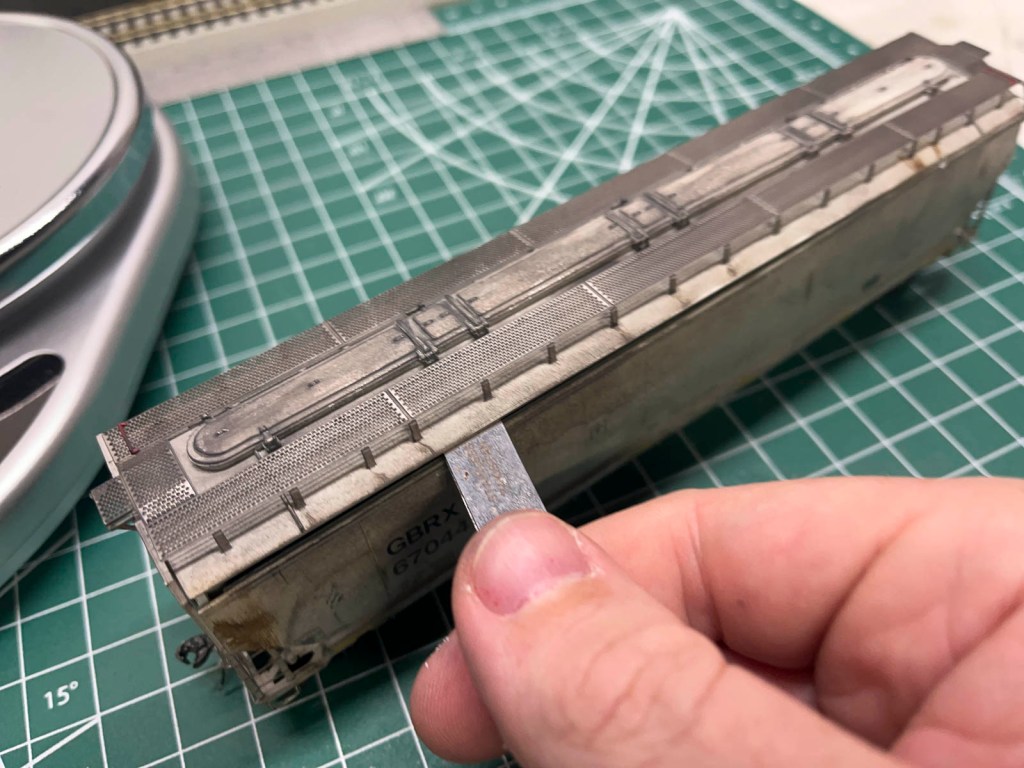
Unfortunately, most of my cars are either covered hoppers or tank cars, two types that are notoriously difficult to add extra weight to without significant effort. I start by identifying factory seams between segments, then carefully pull them apart to access the interior.
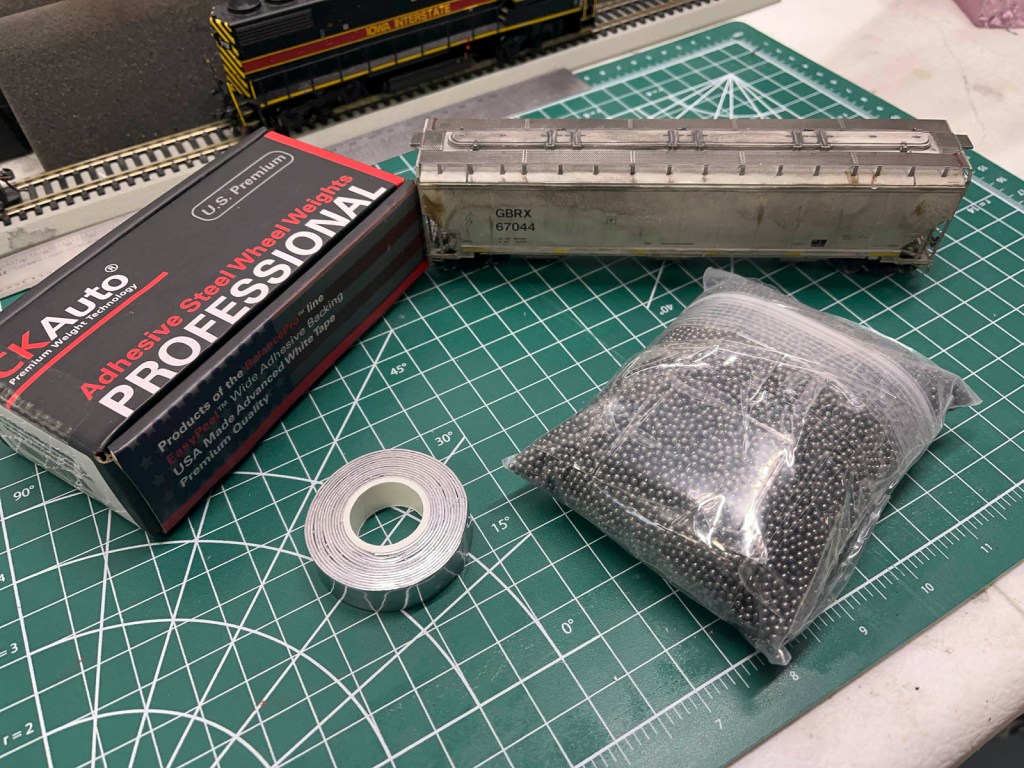
My tools of choice are lead shot, lead tape, and adhesive wheel weights. Each can be fitted into tight corners and crevices and, in the case of the lead shot, literally poured into areas that I cannot open by hand.
NMRA practices call for an ounce plus an additional half-ounce for each inch of car length. For this seven-and-1/2-inch-long covered hopper, that means it should weigh at least five ounces. But is that enough?
There’s been enough discussion amongst the modeling community about overweighting freight cars well past the NMRA recommendations. Mike Confalone, of Allagash Railroad fame, routinely adds significant heft to his rolling stock with excellent results.
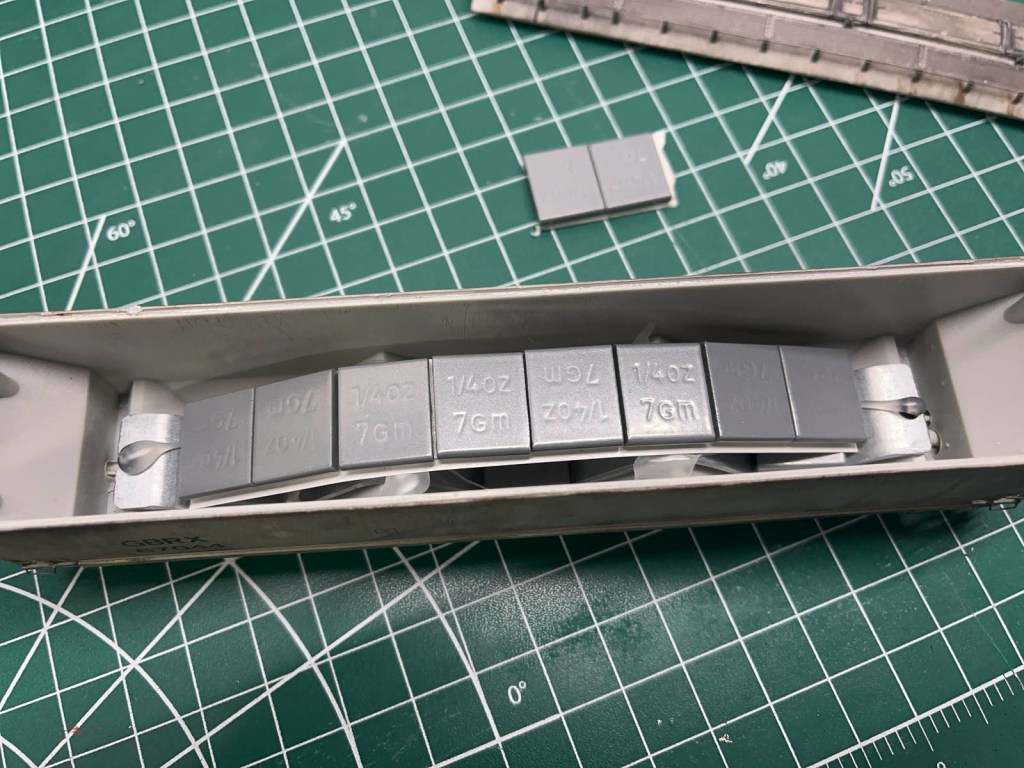
I could obviously load up my cars with enough weight to take down a cruise ship, but there needs to be a practical limit. Ultimately, I’ve chosen to increase the NMRA specs 1.5 times. So that five-ounce covered hopper now clocks in at seven and a 1/2.
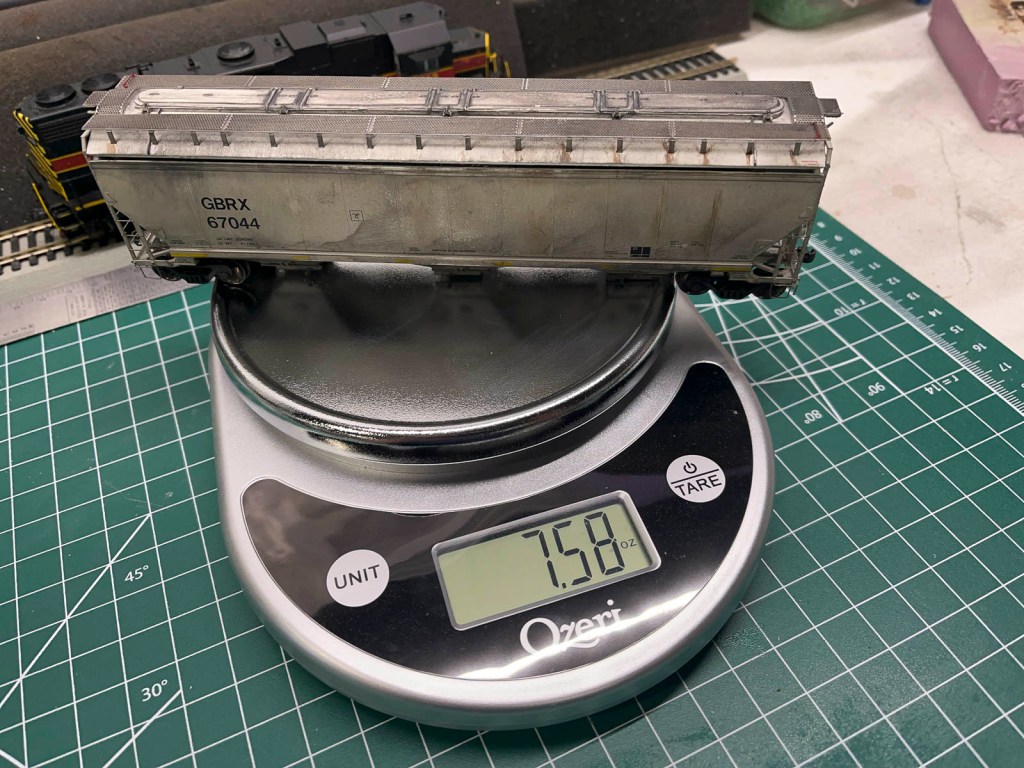
Is that enough? Time will tell. But I know I can always pack on the pounds later if needed.
 The Hills Line